

Pattern studio
Explore a stained-glass window design with selected glass pieces and color controls.
Tessalume brings stained-glass design into a visual workspace built around the records, decisions and reviews that shape the work.
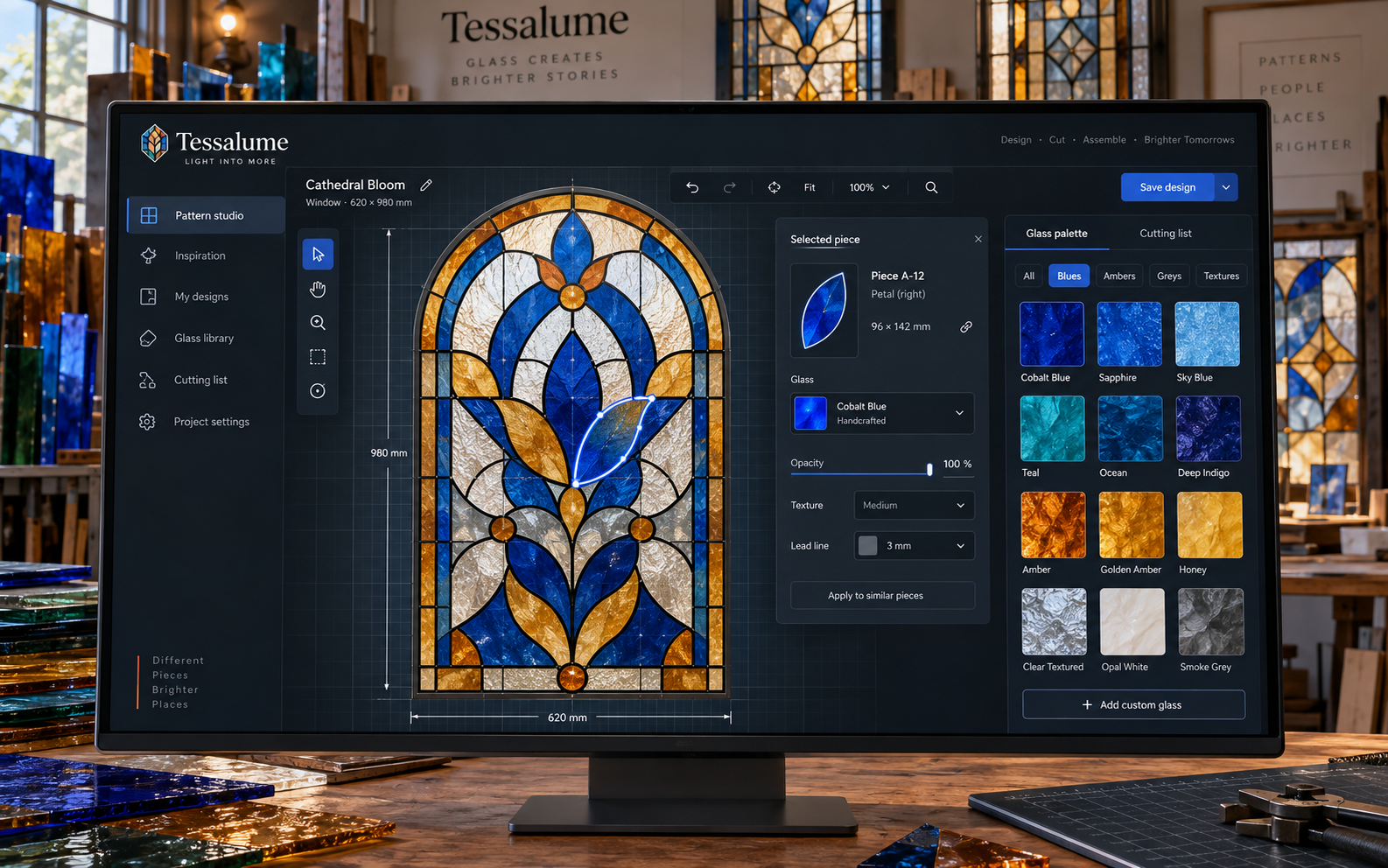
Tessalume is a product design concept for stained-glass design. Glass artists need the pattern, glass choices and individual piece references to remain connected through design review. The scope connects four activities: pattern studio, glass palette, piece register, window review. Each has a dedicated screen, with a luminous pattern canvas with piece palette and cutting-list drawer establishing the visual direction. The work includes interface composition, proposed feature architecture and industry-specific showcase imagery.
Glass artists need the pattern, glass choices and individual piece references to remain connected through design review. A useful workspace must preserve the connection between the original reference, the selected record and the discussion around a change. Showing more information alone would not resolve that handoff.
The design starts with a luminous pattern canvas with piece palette and cutting-list drawer. Explore a stained-glass window design with selected glass pieces and color controls. The remaining views separate exploration, coordination and review into layouts suited to their content. A jewel blue, amber and lead gray palette gives the product its own visual identity, while selected-record panels keep details close to the working surface.
Inside the platform
Four original stained-glass design interface concepts. Records, technical values and depicted workflows are illustrative.
The design establishes four distinct stained-glass design views and a proposed set of twelve feature areas. The visual system prioritizes the working object and its context rather than repeated metric cards. A next validation would ask a practitioner to move from pattern studio to window review, identify the selected record and retrieve the relevant installation preview. These are design deliverables, not measured business outcomes.
4Specialized concept views
12Proposed feature areas
Ready to build something similar?
Whether it's a platform for your industry or something completely different, we can help you build, integrate and scale.