

Workshop overview
Review arrivals, active work, parts delays and pickup readiness.
Rivetline is an automotive workshop-management concept that brings vehicle visits, job progress, parts availability and technician coordination into one view.
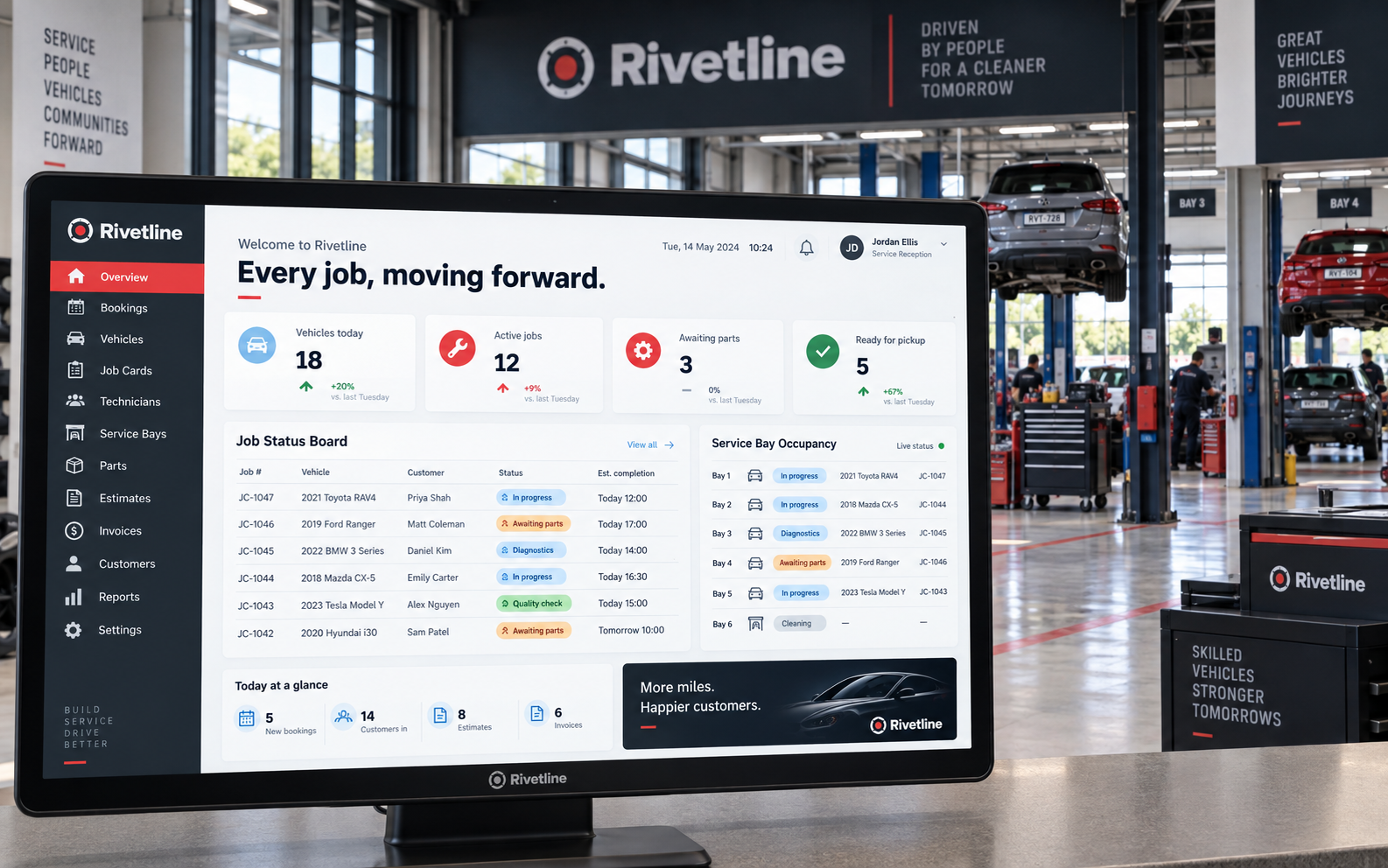
Rivetline explores the administrative journey of a vehicle through a service workshop. Reception needs a clear view of arrivals and collection times, technicians need job context, the parts counter needs to understand reservations and managers need to coordinate bays and people. Four detailed concept screens connect these perspectives through shared job identifiers and status labels. The portfolio scope includes workflow design, workshop information architecture and an automotive visual identity.
A workshop job depends on more than an available service bay. Customer approval, parts readiness and technician capacity can each affect when work moves forward. When these signals live in separate lists, a team can struggle to distinguish a job that is progressing from one that is waiting for a specific handoff.
The proposed workspace connects a daily overview with job cards, a parts view and a bay schedule. The overview highlights arrivals and blockers, job cards organize work by stage, inventory records expose reservations and low stock, and the schedule connects jobs with bays and available staff. The interface focuses on coordination and record visibility rather than mechanical repair guidance.
Inside the platform
Automotive workshop interface concepts with fictional vehicle, job and inventory data.
The concept defines four connected workshop administration views within a twelve-destination navigation. Its scenes place each screen at the relevant service location. The next validation step would ask workshop staff to identify a blocked job, locate its reserved parts and find an available bay and technician.
4Designed workshop views
12Navigation destinations
Ready to build something similar?
Whether it's a platform for your industry or something completely different, we can help you build, integrate and scale.